“I Don’t Know How I Survived It All”: The Story of Oleksii Sharuda, a Mariupol Rescuer, Is Now Part of the Museum of Civilian Voices founded by the Rinat Akhmetov Foundation

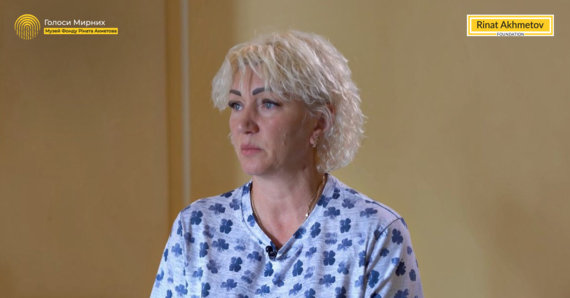
In March 2022, Colonel Oleksii Sharuda, head of the emergency rescue unit of the Main Directorate of the State Emergency Service of Ukraine in Donetsk Oblast, remained in the besieged city of Mariupol. He coordinated rescue operations while under intense enemy fire. He risked his life by venturing into the partially destroyed districts of Mariupol to put out fires, evacuate people, and clear rubble. The rescuer’s story has been added to the Museum of Civilian Voices founded by the Rinat Akhmetov Foundation.
“I had to save people. You have to. You took an oath. You have to help. On 28 February, I gathered all the officers and said that I was taking responsibility for putting out fires and rescuing people,” Oleksii recalls.
At the beginning of the full-scale invasion, six fire and rescue stations were still operating in Mariupol. They had to be relocated because of constant shelling. There was almost no communication, and the fire stations came under fire one after another. Eventually, in March 2022, they were all destroyed by the russian army. The rescuers then worked with virtually no communications, coordinating their actions themselves and constantly risking coming under fire. During that time, their families, children, and other civilians were sheltering in the basement of the central fire station. However, from 14 March onward, constant shelling made it impossible for the rescuers to go out and help people, as any such attempt could have ended in tragedy.
“The radios weren’t picking up signals, and the repeaters had been destroyed. I don’t know how I survived it all. But I tried not to panic because there were 300 people sheltering in the basement. At that time, my wife gave me a great deal of emotional support,” Oleksii says.
When supplies of water, food, and fuel had almost run out, russian troops surrounded the fire station. russian special forces entered the basement looking for the head of the fire station.
“I came out, and they were standing in front of me with assault rifles and helmets. They were looking for wounded military personnel. I told them that there were only rescuers, civilians, children, and women there. Then they told me that their command had decided that we all had to leave the premises and that DNR forces would move into the station, adding that they would not be responsible for them,” Oleksii explains.
Later, the occupiers offered the SES colonel the opportunity to assemble a rescue unit and work under their command. Oleksii refused. Despite the danger, he remained in besieged Mariupol for some time, helping rescuers from other stations leave the city. It was only in early April that he managed to leave the occupied territories with his family.
He now lives with his family in Odesa. The colonel has been retired since 2024. He says that, after everything he went through, he realised that his children, wife, and loved ones now need his attention and care more than anything.
Watch Oleksii Sharuda’s story here: https://bit.ly/4zyDL8C
The collection of the Museum of Civilian Voices founded by the Rinat Akhmetov Foundation now includes more than 145,000 stories about the war. It is the world’s largest collection of testimonies from civilians affected by russia’s war against Ukraine.